Certificate Course in Clinical Diagnostics and Laboratory Technology
Course Overview
Clinical diagnostics plays a pivotal role in disease diagnosis, patient management, epidemiological surveillance, and public health. Approximately 70–80% of medical decisions rely on laboratory investigations. Modern clinical laboratories employ microbiological, biochemical, haematological, immunological, molecular, and automated diagnostic techniques for the detection of infectious and non-infectious diseases.
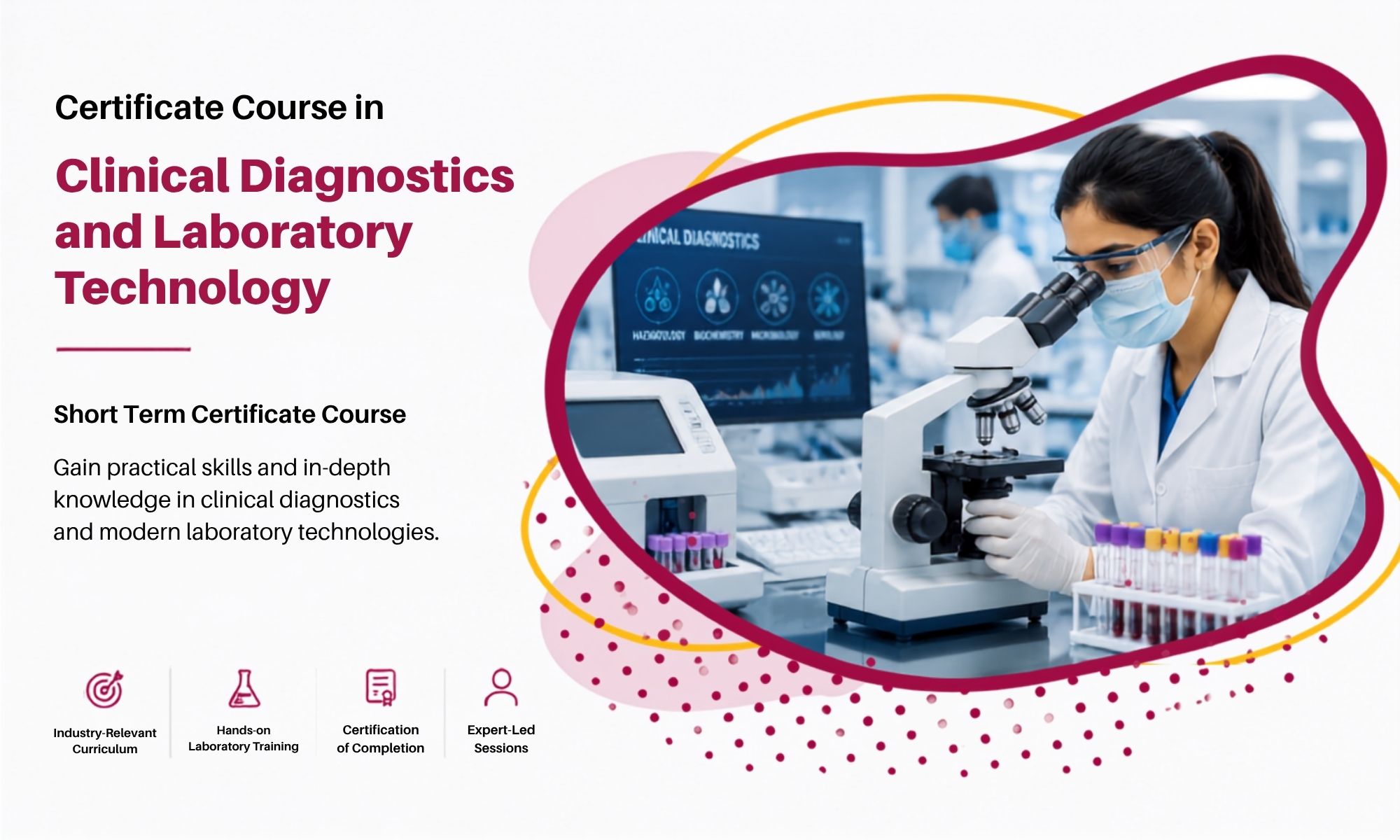
This certificate course provides comprehensive training in clinical specimen collection, laboratory biosafety, quality assurance, microbiological diagnostics, haematology, clinical biochemistry, immunology, molecular diagnostics, laboratory automation, and quality management systems. The course emphasises practical laboratory skills, interpretation of laboratory reports, and compliance with international laboratory standards.
Course Details
- Mode: Online + Offline (Practical/Laboratory Work)
- Level: Intermediate / Advanced
- Duration: 30 Hours Theory + 10 Hours Practical/Laboratory Work
- Language: English
- Format: Online lectures, learning materials, quizzes, assignments, case studies & hands-on laboratory work
- Eligibility: Undergraduate and postgraduate students in relevant life-science disciplines
What Will You Learn?
By the end of the course, students will be able to:
1. Understand the principles of clinical laboratory diagnostics.
2. Demonstrate proper specimen collection, handling, transportation, and storage.
3. Perform basic microbiological, haematological, biochemical, and immunological laboratory tests.
4. Explain molecular diagnostic techniques used in clinical laboratories.
5. Interpret laboratory test reports and correlate them with clinical conditions.
6. Apply standard operating procedures (SOPs) and laboratory documentation practices.

Course Outcomes
On successful completion of the course, students will be able to:
CO1: Understand Clinical Diagnostic Laboratory Practices
Explain the fundamental principles, processes, and workflow of clinical diagnostic laboratories.
CO2: Develop Practical Diagnostic Skills
Perform routine laboratory investigations using standard clinical diagnostic methods.
CO3: Apply Biosafety & Quality Management Practices
Apply biosafety measures, quality assurance, and quality control procedures in clinical diagnostic laboratory settings.
CO4: Interpret Laboratory Findings
Interpret laboratory findings and understand their significance in disease diagnosis and patient management.
Certificate
Students who complete the course requirements and assessments will receive a Savitr Bioscience Certificate of Completion in the Certificate Course in Food Microbiology and Food Safety.
The certificate recognises successful completion of the course and participation in its prescribed learning and practical components.
Need our expertise?
Sent us a message